Your Custom Text Here
Uplighting Essentials
People are always asking us questions about uplights for their event (as they should as they are the most popular add-on!) so we decided to make a blog post about everything you need to know about uplighting for your next event..
Uplighting: Everything you need to know for your next event
People are always asking us questions about uplights (as they should as they are the most popular add-on for events!) so we decided to make a blog post about everything you need to know about uplighting for your next event..
What is Uplighting?
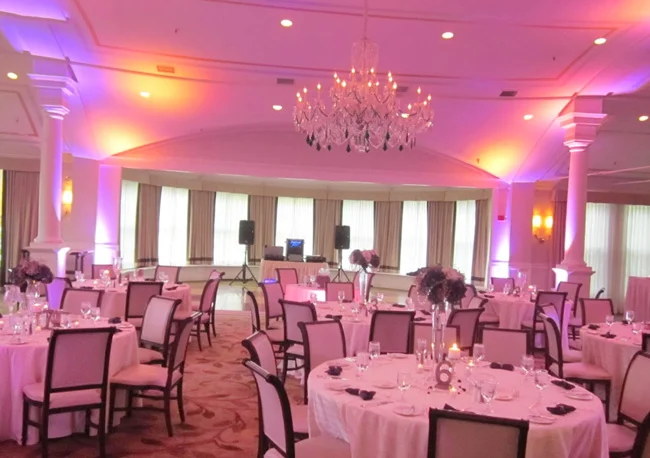
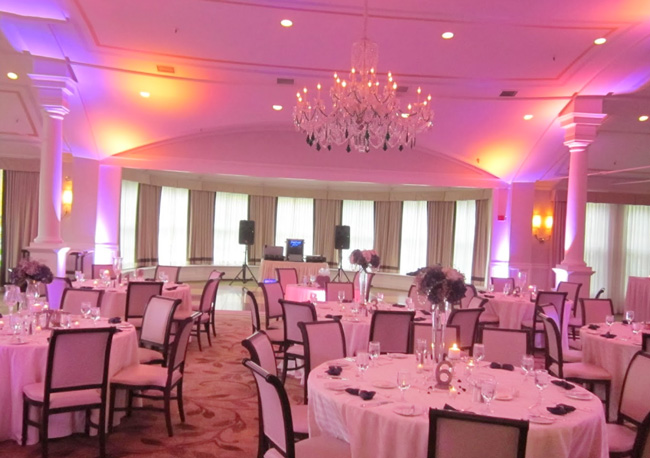
Uplights are really wash lights (sometimes referred to as 'fixtures') that are placed on the floor and face upwards. This placement of the lights on the floor provides a single color wash that illuminates the wall and the ceiling. When used outside, they are also used to illuminate walls of buildings or the trunks and canopy's of trees. The main purpose of uplights are to add character or ambience to a dead room, or color to an outdoor location. Very often big events are held in large ballrooms in hotels or other venues which are essentially huge rectangles - this makes for a great gathering spot for events - but unfortunately these rooms are so empty and plain that it can make the event feel very 'cold'. Often times uplighting is the most economical way to improve the look and feel of a space (as decorating a large room can cost 10 or 20 times as much). Uplights transform a boring white or brown room into any color you can imagine and provide a soft glowing light as the night progresses. It also looks excellent once the dancing starts as it creates a glowing light 'wall' around the perimeter of the venue. In terms of outdoor events, uplighting can provide soft lighting for guests safety as well as beautifying the space.
What are the differences in Uplights? Which ones are right for my event?
History of wash lights: In the 'old days' (up until about 10 years ago or so) uplights were essentially white par cans (basically white stage or theatre style lights) with a colored gel paper placed over the white light. The drawbacks of these lights were that they were heavy, drew a fair amount of power each, were limited in colors to whichever gel colors the DJ had, and got really hot. Finally LED technology improved to the point were the par cans were replaced and LED uplights became the standard. The differences in LED uplights comes down to amount of LEDs per light (although this is changing now with the latest generation), plus the number of different color LEDs contained in the fixture. The other difference between modern uplights is whether they are battery powered (commonly referred to as 'wireless') or whether they require an outlet (usually referred to as standard uplighting).
Brightness: The more LEDs per light determines the brightness of the light (standard numbers for Chauvet fixtures for example are 38, 56, or 64 LEDs per light). The latest generation of uplighting has moved away from the many small LED designs and now are using 3, 5, 7,or 12 large LEDs to determine brightness. These also usually reflect the amount of brightness (or potential brightness) of a light. These large LEDs are superior to the many small ones as they provide smoother blending of colors to produce the color desired.
Colors Produced: Standard uplights use 3 colors to produce (or try to produce) every color in the color spectrum (Red, Green, and Blue). These uplights are referred to as RGB uplights. The next step up adds an 'a' (for amber) and the best of the newest generation of uplights also adds an 'a' as well as a 'uv' (for white and UV). These are referred to as RGBA or RGBAW+UV uplights. The more colored LEDs an uplight contains the truer colors they can produce. For the standard colors (red, light blue, dark blue, purple, green, yellow) an RGB light produces excellent results. However if you have a custom color you are trying to match, especially if it is a pastel or very soft coloring, you will need an RGBAW to accurately create those colors. For example, if you want a true 'champagne' or 'soft pastel greenish white' then your best bet is to go with a RGBWA fixture.
Battery or Standard Wired?: This is another recent development (last couple years) as prior to this battery packs for uplights were big and bulky and not practical. The latest wireless uplights are still fairly small and light yet can be placed anywhere and are not dependent on outlets. This may not be a concern in a large ballroom, but for outdoor areas it's almost a must. The other benefits of wireless uplights is that they can used in new creative ways, such as placed underneath dinner or cocktail tables (without power cables showing) which produces a beautiful effect.
Questions to ask your DJ or A/V provider when ordering uplights for your event: Firstly you would want to determine your needs in terms of brightness, availability of outlets at your venue, and color desired. We have had several instances where a client or a wedding planner asks for a very specific soft color but only ordered standard uplighting (to keep costs down) which the light was unable to faithfully produce. Also trying to use standard uplights at an outdoor event means compromises will often be made in terms of placement as more than 25-50 feet of cabling per uplight is quite unreasonable. Conversely, the other thing that sometimes happens is that couples will order premium uplighting even though they are in a venue with plenty of outlets and are are requesting a standard purple or blue wash (which standard uplights would be perfect for). Once you have determined your needs however, don't be afraid to ask if the DJ or A/V company has the right equipment. Some DJs will only have standard RGB moderately bright (38 or 56 led) uplights, or worse will still be using par cans with colored gels. In some cases it may be better to hire a separate production or a/v company to handle your uplighting and monograms as they will have pro level equipment (of course this will usually cost much more).
Whats the differences in pricing typically?: Standard RGB wired LED uplighting usually runs between $150-250 per 8 lights (in San Diego). Wireless and premium (RGBAW) uplighting is usually around double that. Considering though how much of an effect uplighting can have on the look and feel of a venue, and how even the premium uplighting is many times less than hiring a wedding decorator to decorate the venue, even the premium uplighting can be one of the best values dollar for dollar that a couple might spend on their wedding.
If you have any additional questions about which uplights are right for you, please just contact us!
- Oct 2017 -
Uplighting is easily the most popular add-on! Here are some reasons why..
Uplighting can change the entire feel of a room, and can transform a 'dead' room into one that feels lively and classy. Even a room with 'character' can benefit from some sort of uplighting.
Uplighting is the add-on option that customer's always choose to add over all others, and for good reason. Uplighting is excatly what it sounds like: a colored light placed on the floor, that projects light (a wash) upwards. Almost any color is achievable, with the most popular being purple, blue, red, and amber.
Uplighting can change the entire feel of a room, and can transform a 'dead' room into one that feels lively and classy. Even a room with 'character' can benefit from some sort of uplighting. Often clients will say that uplighting was the best value (dollar for dollar) of all of their decoration budget, as it is immediately noticeable and can have such an impact. Usually uplighting is placed in the corners of a room and around pillars and other objects for the greatest impact. Uplighting should always looks symmetrical and should consider the layout of the room. Another area of a room that one sometimes finds uplighting placed, is behind the bar area and/or behind the DJ area. Both add a bit of excitement to a room. The other trend in uplighting is to go 'beyond' uplighting the room itself, and uplight the individual tables as well. This is a more expensive undertaking, as it requires many more uplights, but it definately increases the 'wow' factor.
The newest trends are towards wireless uplights as they dont require close proximity to power outlets or long power extensions. This means that they can be placed in areas unreachable by standard uplighting, and avoid the presence of extension cabling. Unfortunately wireless uplights cost much more than standard uplighting (at this point), but there is every reason to believe the price will come down in the next year or so.
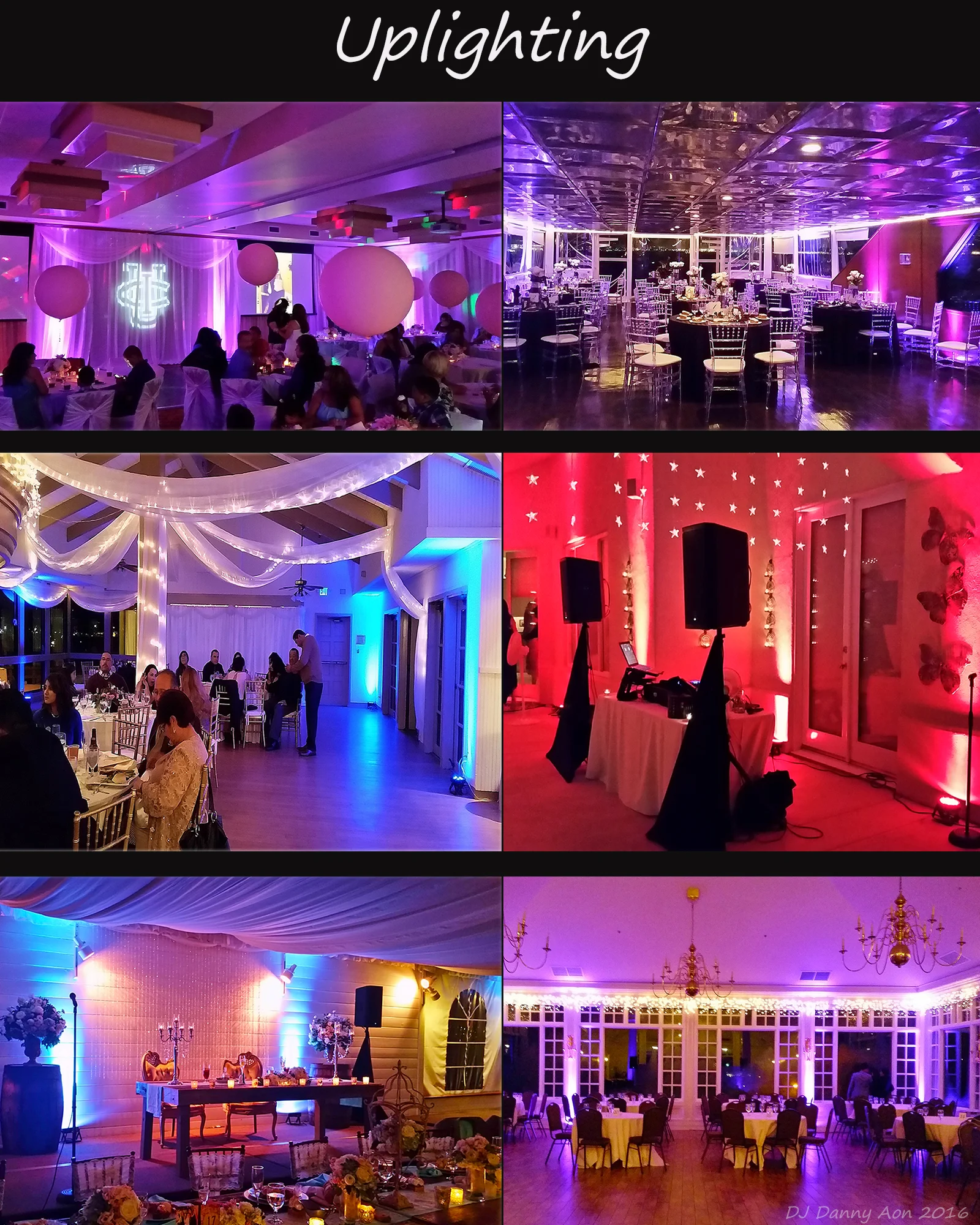
I have made a photo collage of some of the events from the past year that I used uplighting on (which I have attached to this blog), to give you some examples of what it looks like. I find that pictures don't really do them justice, although you can find some great professional uplighting pictures on a Google search!
Thanks for reading, and of course if you have any questions about uplighting, or any other kind of lighting, please send me a message!